EMPOWER: Empower AD deployment through zero-waste valorisation of digestate and biogenic CO2 for commercial fertilizers and high-value bioproducts production
This project aims to develop a zero-waste, integrated process that converts digestate and CO₂ into fertilizers and high-value bioproducts, thereby supporting anaerobic digestion deployment.
Project Insights
-
€951,773
Total Project Costs -
4 yr
Project Duration -
2025
Year Funded
Project Description
Ireland is planning to increase the use of biomethane, a renewable gas, to enhance energy security and help meet climate goals. To achieve this, 200 new biogas plants will be built by 2030. These facilities will produce not only biomethane but also two main byproducts: a nutrient-rich slurry (digestate) and carbon dioxide (CO₂). While managing these byproducts poses challenges, they also offer opportunities to produce valuable bioproducts. This project will develop new methods to convert them into useful products such as commercial biofertilizers and eco-friendly pest control solutions. It involves three main components: first, using an advanced electrochemical technology called bipolar membrane electrolysis (BMED) to produce commercial-grade biofertilizers from the liquid portion of the digestate; second, reusing BMED byproducts to reduce costs in biomethane production; and third, transforming the solid fraction of digestate into natural pesticides. The project will begin with laboratory development and proceed to real-world testing of the BMED technology. We will also assess the environmental and economic benefits of this approach and explore market potential for these new products in Ireland and beyond. By improving the use of these byproducts, the project supports cleaner energy and advances Ireland’s climate objectives.
Project Details
Total Project Cost: €951,773
Funding Agency: Sustainable Energy Authority of Ireland (SEAI)
Year Funded: 2025
Lead Organisation: University of Galway
Partner Organisation(s): University College Dublin, Teagasc
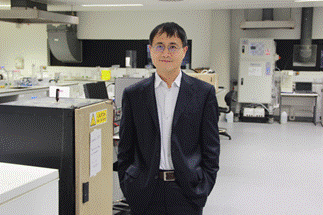
Xinmin Zhan
Lead ResearcherExpertise: Anaerobic digestion, agricultural waste management, wastewater treatment with a focus on nutrient removal and recovery, critical materials recovery from solid wastes
Social: LinkedIn