Understanding private e-cargo bike use in Ireland
This research project looked at how people in Ireland use private e-cargo bikes in their daily lives.
Project details
Funding Agency: SEAI
Year funded: 2022
Lead organisation: Trinity College Dublin
Lead Researcher: Robert Egan
This project, funded by SEAI, looked at how people in Ireland use private e‑cargo bikes in their daily lives. The study focused on how people use their e-cargo bikes, how they travel with them, where they park them, and how well Ireland’s cycling network supports them.23 detailed interviews were carried out and 203 e-cargo bike owners responded to an online survey.
Project aim
The aim was to understand why people choose e‑cargo bikes instead of cars, especially for family travel. The project wanted to identify what encourages people to use an e-cargo bike over a car, what barriers might stand in the way, and what changes could support more people to switch from cars to e-cargo bikes.
Research phases
The research had four main parts:
- Literature review. Studying what other researchers have already learned about cargo and e‑cargo bikes
- Qualitative interviews. Talking to e-cargo bike owners about their experiences and habits
- Quantitative survey. Collecting data to confirm and expand on what was learned in the interviews
- Policy communication. Sharing findings with policymakers, writing briefs, and presenting at events
A key part of the work was understanding “the unique combination of elements required to make e‑cargo bikes a successful substitute to the car or bicycle.”
Key findings from the e-cargo bike study
Three main findings from the study:
- E-cargo bike ownership helps families travel without a car. The report states, “E-cargo bikes were used as a primary mode of family mobility, often replacing the private car.” E-cargo bikes helped parents to keep cycling even when their travel needs increased.
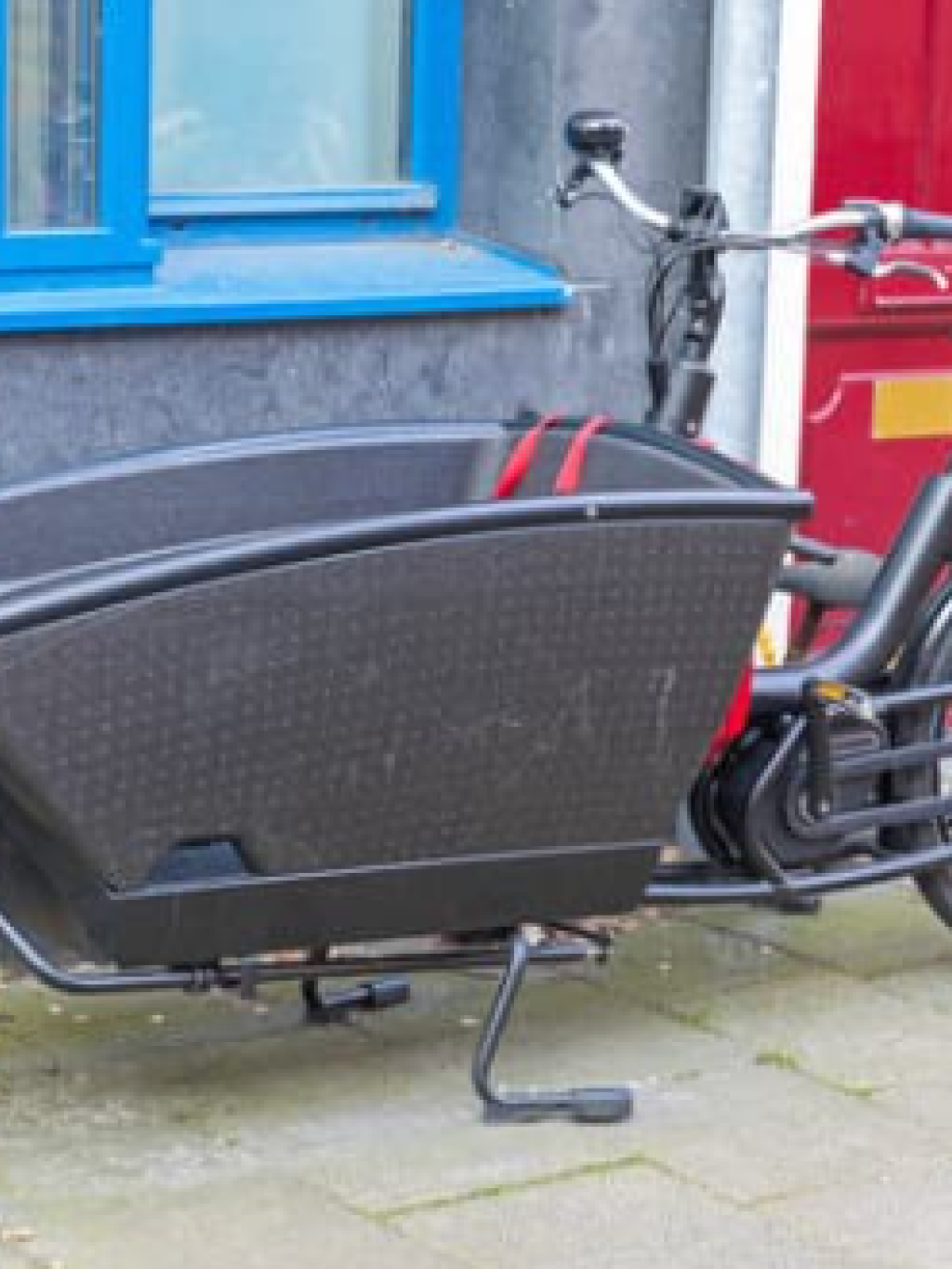
- Parking is a major challenge. Owners often struggled to find safe and convenient places to park their e-cargo bike. The report explains that e-cargo bikes were “more ‘out of place’ inside official cycle parking facilities but less ‘out of place’ when using car parking spaces.”
- Cycle networks are not always suitable for e-cargo bikes. Narrow lanes, poor surfaces, and limited space meant that e-cargo bike users sometimes could not access protected cycle routes. These issues created “systemic sticking points” that made e-cargo bike use harder.
Actions that could support the switch to e-cargo bikes
The study suggests several actions that could help more people switch to e-cargo bikes:
- Expand e-cargo bike ownership supports. Offer more grants and run local trial programmes
- Improve e-cargo bike-friendly parking. Provide secure off‑street parking, on‑street enclosed storage, and allow easier installation of home storage
- Upgrade cycle networks. Design routes that fit e-cargo bikes, fix older routes, and improve maintenance
The report notes that “Further analysis of quantitative survey data and possibly some qualitative analysis remain as possibilities for future publication and policy briefing.”
SEAI national energy research funding programme
The SEAI National Energy Research Development and Demonstration (RD&D) Funding Programme invests in innovative energy RD&D projects which contribute to Ireland's transition to a clean and secure energy future.
Objectives
- Support solutions that enable technical and other barriers to market uptake to be overcome
- Grow Ireland's national capacity to access, develop and apply international class RD&D
- Provide guidance and support to policy makers and public bodies
- Accelerate competitive energy-related products, processes and systems