Balbriggan Sustainable Energy Community working to take community climate action
Balbriggan Sustainable Energy Community (SEC) secured over €60,000 through the Community Climate Action Programme (2024-2025) to support climate action in partnership with other local community groups in Balbriggan.

Background
Established in 2021, Balbriggan SEC is working to create a more energy-efficient and resilient community through knowledge sharing, community-led renewable energy projects and nature-based solutions. The group brings together local people who are committed to taking practical action on climate change.
The SEC’s millwheel logo reflects Balbriggan’s industrial heritage, including the town’s association with Ireland’s first water-powered textile loom. Building on this legacy, the community sees an opportunity to lead innovative, community-driven renewable energy projects.
Located on the North County Dublin coast, Balbriggan is a growing town with a large younger population. These characteristics have helped drive local efforts to build resilience to climate change and support a more sustainable future.
To maximise local participation, the SEC adopted a whole-of-town approach when developing its Energy Master Plan (EMP). Completed in 2024, the EMP highlighted strong levels of community awareness, engagement and interest in climate action.
The project
Balbriggan SEC secured €61,312 through Phase 1 of the Community Climate Action Programme (2024–2025). The programme is managed by Fingal County Council in collaboration with the Department of Climate, Energy and the Environment.
Funding was secured for four community projects:
- Installation of solar PV panels and LED lighting at the Balbriggan Meals on Wheels hall (€12,150 + €1,816)
- Installation of new club doors and LED lighting at Balbriggan Football Club (€14,794.88 + €19,267.76)
- A cargo bike locker for Balbriggan Tidy Towns (€794)
- Improvements to the Balbriggan Laudato Si St Peter and Paul’s Church Community Garden (€12,535)
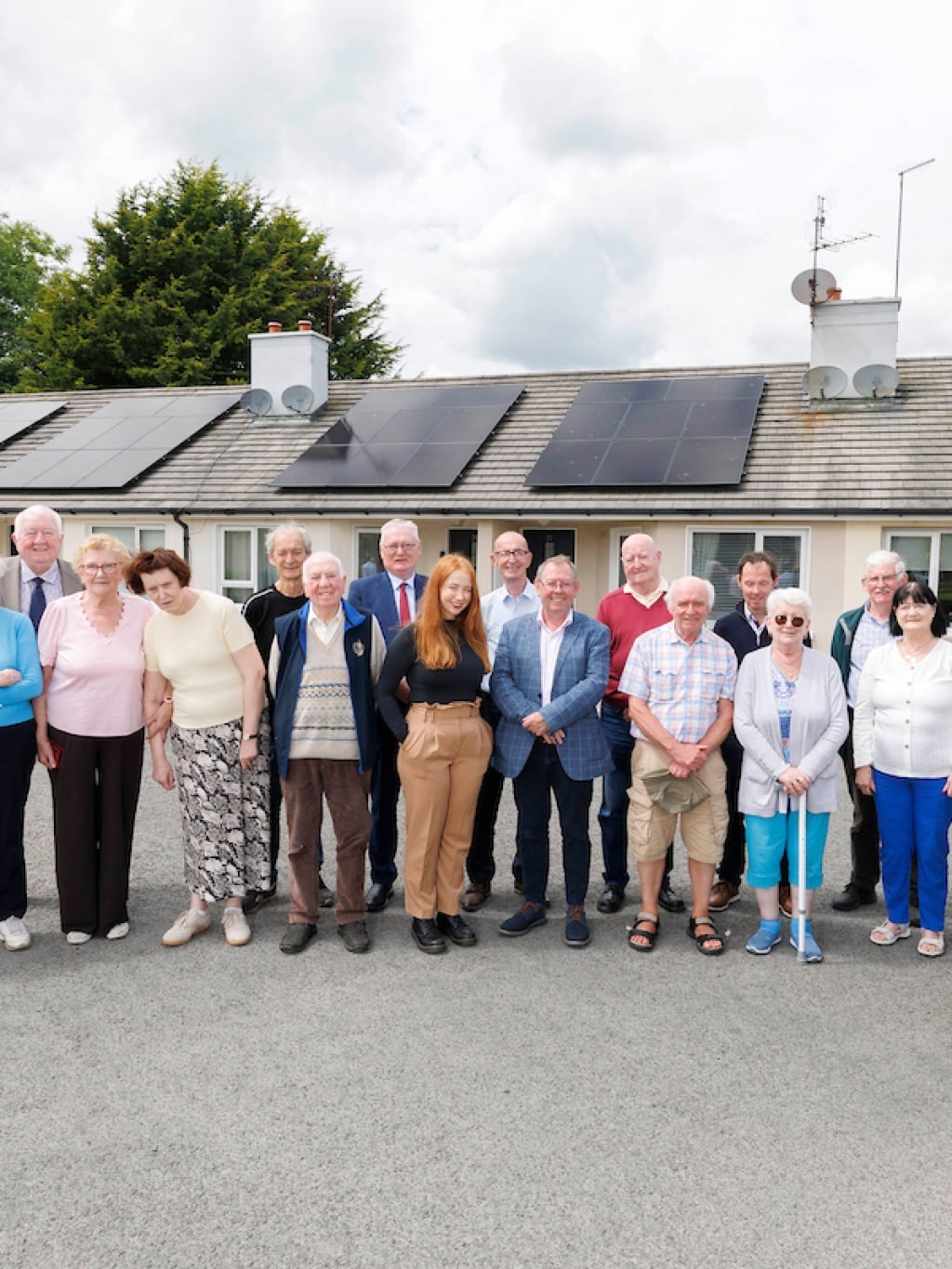
These projects have delivered practical benefits across the community. Balbriggan Football Club, which is also used by other community groups, now operates from a more energy-efficient facility. Balbriggan Meals on Wheels has installed solar PV, helping to reduce energy costs and support the sustainable delivery of its services.
The initiative also strengthened relationships between the SEC and local organisations, creating new opportunities for collaboration and supporting the ongoing work of community groups across the town.
Management and delivery of projects
Sarah Zimmermann acted as project manager, dedicating approximately one hour each working day throughout the year. The role drew on skills in bookkeeping, project management and stakeholder engagement. Governance and decision-making were managed through monthly SEC committee meetings, while the overall scope of works was guided by the original grant application.
In 2024, the SEC worked with local community groups to develop a funding application through an online grant portal. Between three and five contractor quotes were obtained for each project, allowing contractors to be selected based on overall value rather than cost alone. Applications were assessed and approved by Fingal County Council and the Department of Climate, Energy and the Environment.
Following approval, an initial payment of 25% of the funding allocation enabled projects to begin. The SEC coordinated closely with contractors to schedule works and manage deposits, while all administration was completed through the online grant management portal. Documentation such as invoices, receipts, bank statements and photographs was submitted to support reimbursement claims. The full grant allocation was directed towards project delivery.
Balbriggan SEC also acknowledged the support provided by Fingal County Council Community Climate Officer, Sinead Fox, throughout the process.

Managing partnerships
Balbriggan SEC invited several local community groups to partner on the funding application, with each group committing to deliver the activities outlined in the proposal. These partnerships were central to the delivery of the projects and required ongoing engagement and accountability from all involved.
Relationships were maintained through a combination of in-person meetings, phone calls, text messages and email communication. A responsive and proactive approach to addressing issues as they arose was critical to keeping the projects on track and ensuring successful delivery.
Working with other community groups enabled the SEC to support organisations already demonstrating leadership within the community, while also extending its local reach and impact. However, the role of the SEC as a volunteer-led coordinator presented challenges, as it involved managing projects on a professional scale within an informal structure. On one occasion, direct communication between contractors and a partner group led to some confusion. In hindsight, holding a joint meeting with all stakeholders before the commencement of works would have helped to clarify roles, manage expectations, and reinforce the SEC’s coordinating role in project delivery.
Challenges
Several challenges emerged during project delivery. A lengthy period between application submission and funding approval meant that contractor quotations obtained during the application stage were no longer current when works began. Updated quotations were required, while the approved funding allocation remained based on earlier pricing.
The reimbursement-based funding model also created cashflow pressures, despite the availability of an initial advance payment. In addition, coordinating multiple projects simultaneously required a significant investment of time and carried a high level of responsibility for volunteers.
Practical lessons identified during delivery:
- Develop a clear schedule of works with community groups and contractors from the outset to help manage cashflow and maintain project momentum.
- Hold a joint stakeholder meeting before works begin to ensure everyone understands the Community Climate Action Programme and their respective roles.
- Make contractors aware of potential delays between funding approval and project commencement so that expectations can be managed appropriately.
Results
The project delivered measurable benefits, including reduced energy consumption and lower energy costs for Balbriggan Football Club and Balbriggan Meals on Wheels.
The initiative also raised the profile of Balbriggan SEC locally and nationally. Through the experience of delivering the projects, the group strengthened its project management capabilities and developed new expertise. This increased visibility led to invitations to participate in two research projects. Community partners expressed satisfaction with the outcomes and indicated an interest in future collaboration.
Next steps
- Supporting Balbriggan Football Club with an application to Community Climate Action Programme Phase II.
- Working with SE Systems on an SEAI Community Energy Grant application.
- Participating in EU INTERREG and HORIZON projects.
- Progressing through the SEAI Community Enabling Framework to develop a grid-scale, community-owned renewable energy generation project.