West Kerry Dairy Farmers SEC – Ireland’s first sectoral Sustainable Energy Community
A farmer-led Sustainable Energy Community on the Dingle Peninsula is cutting energy costs, installing solar power, building community cohesion and reshaping how dairy farming engages with climate action.

Background
The West Kerry Dairy Farmers Sustainable Energy Community (SEC) was established to support dairy farmers on the Dingle Peninsula. Dairy farms in this region are typically small-scale, averaging around 60 cows, yet they have significant energy demands due to milking, cooling, and water heating.
The SEC was initiated by local farmer Dinny Galvin, alongside Michael Kelliher, Michael Dowd and Colm Murphy. Having completed a Community Energy Mentor course, Dinny was motivated not only by rising energy costs, but also by the growing public narrative that positioned dairy farming negatively in relation to climate change.
This project was an opportunity to change that narrative and to demonstrate that farmers are willing and able to be part of the climate solution when supported with the right knowledge, tools and peer leadership.
The project
Soon after forming, the SEC committed to developing an Energy Master Plan. The plan builds a clear picture of local energy use and supply, and maps out goals and potential projects for the community. The group agreed a shared ambition to become ‘a resilient, energy efficient farming community by reducing costs and carbon emissions, harnessing renewable energy, and inspiring other rural farming communities.’
DCSix Technologies were appointed as energy consultants to support the development of the Energy Master Plan (EMP). A key objective was to gain a detailed understanding of how and when energy was being used on farms. This included the installation of Wattrics energy monitoring equipment in parlours to capture detailed energy usage data, the distribution of 52 energy surveys among participating farmers and carrying out five in-depth farm energy audits.
The project was supported by SEAI funding for the Energy Master Plan, with additional sponsorship from Kerry Agribusiness, ESB Networks and Dovea Genetics, which enabled further monitoring and engagement.
These insights from the Energy Master Plan allowed the group to move beyond assumptions and make evidence-based decisions.
Key Findings from the EMP
The Energy Master Plan identified several important insights:
- Agricultural diesel accounted for approximately 52 percent of total energy spend, costing an estimated one million euro annually across participating farms.
- Fewer than half of farmers had installed a night-rate electricity meter.
- There was strong potential for solar PV, particularly using East–West panel configurations.
Unlike domestic homes, dairy farms have peak electricity demand during morning and evening milking. An East–West solar array aligns better with these demand patterns, improving on-site energy use and value.

The importance of collaboration
The success of the SEC was underpinned by strong local leadership and collaboration. Dinny Galvin acted as a trusted coordinator and motivator, supported by Catríona Fallon, who was the secretary. Deirdre De Bhailis and others in the Dingle Hub provided ongoing support and advocacy, while Claire McElligott contributed experience from the Dingle ESB Innovation Project and David Garner who worked in wind energy.
Active participation from local farmers was essential in ensuring credibility and peer-to-peer trust. Seamus O’Hara the SEC mentor provided guidance. The group was established during the Covid pandemic, which also helped in enabling engagement, with farmers more open to online meetings and collective learning during this period.
Results and key achievements
The West Kerry Dairy Farmers SEC became Ireland’s first sectoral Sustainable Energy Community, focused specifically on dairy farming. One of the most significant outcomes was the Solar Meitheal, a collaborative and peer-supported approach to solar PV adoption.
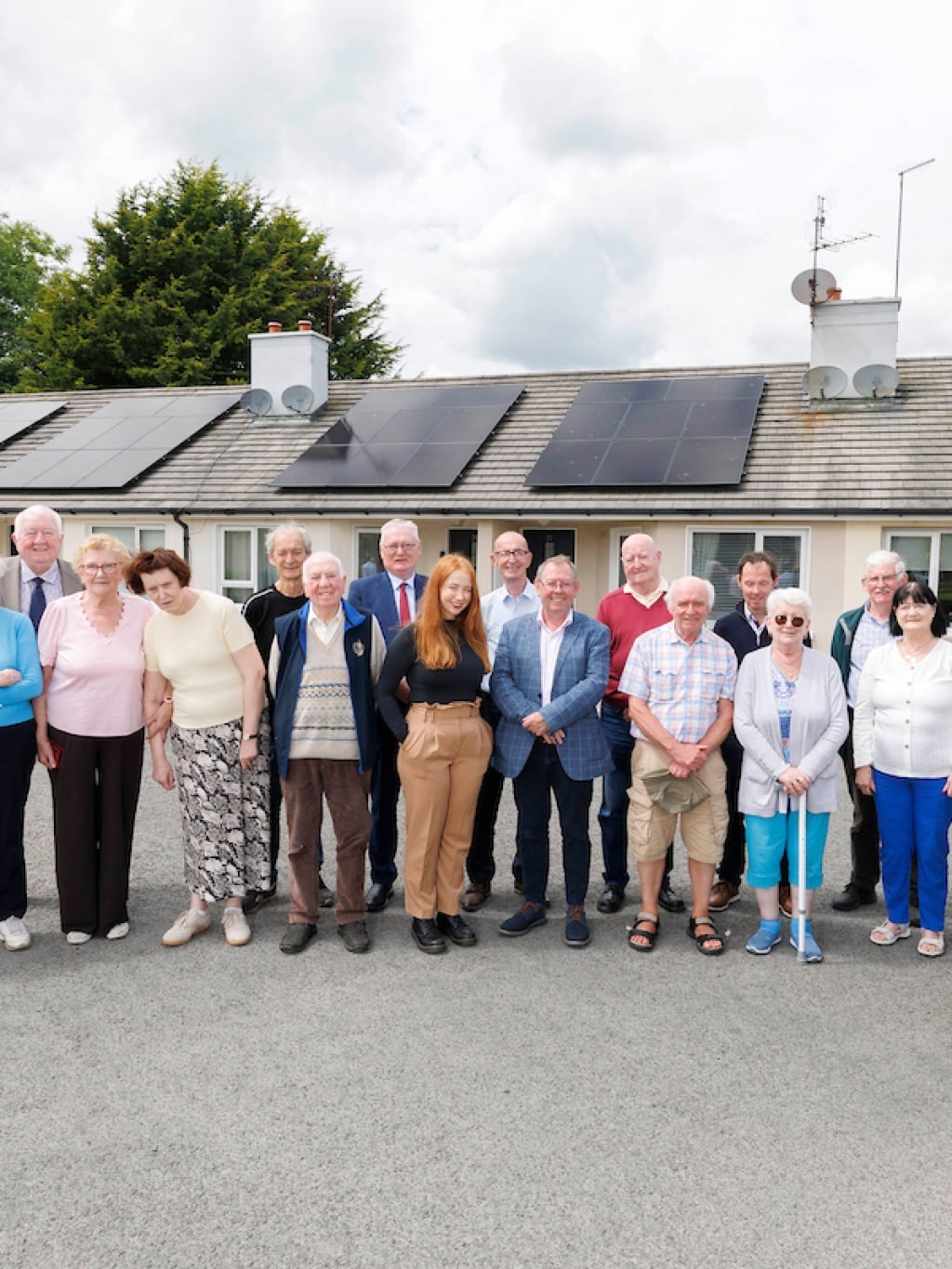
In 2025, thirty farms installed solar PV, with increased uptake of night-rate meters and smarter electricity tariffs. Farmers reported improved confidence and understanding of their energy use. The project also inspired the creation of other sectoral SECs, including a Tourism and Hospitality SEC.
While it is still early to quantify total energy and carbon savings, the foundations for long-term impact are firmly in place.
Beyond the technical measures, the SEC delivered important social benefits. It brought farmers together during a period of isolation, creating space for shared learning, discussion and mutual support, both online during Covid and later at in-person events. The group has since shared its knowledge with other farming groups and regions to inspire more farmers to consider their own SEC.
What's next?
The SEC sees significant future potential. This includes further rollout of heat recovery systems in dairy parlours, deeper analysis of energy savings using post-installation electricity data, and exploration of community-owned renewable energy such as a solar farm. They will continue to share their findings with other farming communities.
This project shows what is possible when farmers lead the transition to cleaner energy together. Other farming communities are encouraged to explore setting up a Sustainable Energy Community and to learn more about available supports, training and funding opportunities.
Learn about SECs (opens in a new tab)