Energy in buildings and communities technology collaboration programme
The Energy in Buildings and Communities TCP carries out research & development activities toward near-zero energy and carbon emissions in the built environment.

The Energy in Buildings and Communities TCP mission is to develop and facilitate the integration of technologies and processes for energy efficiency. The EBC TCP Executive Committee Representatives for Ireland are Mr. Conor Hanniffy (SEAI) and Mr. Brian McIntyre (SEAI).
For further information, please visit the IEA EBC TCP webpage.

Conor Hanniffy
Conor Hanniffy
With a background in Mechanical Engineering and Project Management, Conor has over 20 year's programme management experience in private and public sectors.
Conor has previously managed SEAI's Accelerated Capital Allowance programme for energy efficient equipment, the Building Energy Rating Programme the Deep Retrofit Pilot Programme. Conor now manages the Energy Poverty Programme for SEAI and also actively engages with the research community and with other EU Member States to leverage both the evidence base and approach to inform strategic direction of SEAI programmes.
Contact: [email protected]
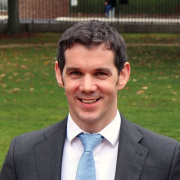
Brian McIntyre
Brian McIntyre
Brian McIntyre is Programme Manager looking at the performance of technologies to deliver high-performance, low-energy homes. He has 17 years' experience in the Energy sector and has previously worked on SEAI's Deep Retrofit Pilot Programme and the Warmer Homes Scheme. He joined SEAI in 2017 having previously worked in the private sector providing consultancy to the public and private sector on policy, infrastructure and technology, including on Strategic Environmental Assessments of national policies.
Contact: [email protected]
Annexes
The aim of this Annex is to promote an understanding of the complex behaviour of air flow in buildings and to advance the effective application of associated energy saving measures in both the design of new buildings and the improvement of the existing building stock.
The Representatives for Annex 5 are Mr Simon Jones (Air Quality Matters Limited), Dr Marie Coggins (University of Galway) and Dr James McGrath (Maynooth University).
For further information about the Annex, please visit the AIVC webpage.
The aim of this Annex is to evaluate and demonstrate the actual energy efficiency of heat pump systems in buildings. Certain heat pump systems in buildings have previously been found to exhibit low energy efficiency under low partial load conditions, while other heat pump systems have been able to maintain higher energy efficiency under the similar conditions. Therefore, technical guidance on how to improve the overall energy efficiency of such heat pump systems is critical information for many engineers and HVAC system designers. Further, public policy and decision makers require support on how requirements to follow such technical guidance can be implemented within building energy codes and regulations.
The Representative for Annex 88 is Dr Adam O'Donovan (Munster Technological University).
For further information about the Annex, please visit the Annex 88 IEA TCP webpage.
Annex 89 focuses on the pathways and actions needed by various stakeholders and decision-makers to implement whole life cycle based net-zero greenhouse gas (GHG) emissions from buildings in policy and practice. This means explicitly considering both embodied and operational GHG emissions across all stages of the built asset life cycle.
The Representatives for Annex 89 are Prof James O'Donnell (University College Dublin) and Mr Conor Shaw (University College Dublin).
For further information about the Annex, please visit the Ways to Implement Net-zero Whole Life Carbon Buildings webpage.
The BIM (Building Information Modeling) methodology is an approach for integrated digital planning that carries the potential for significant improvements in building energy performance. The method foresees that information from stakeholders like architects, planners, modelers, constructors and even operators feed into the same data source - the BIM model.
The Representatives for Annex 91 are Prof James O'Donnell (University College Dublin) and Sobia Bano (University College Dublin).
For further information about the Annex, please visit the Open BIM for Energy Efficient Buildings webpage.
This Annex is proposed to provide a network of experts and facilities to study the methods of measuring the Heat Transfer Coefficients of dwellings.
The Representative for Annex 94 is Dr Aimee Byrne (Trinity College Dublin).
For further information about the Annex, please visit the Annex 94 IEA TCP webpage.
This Annex will develop new knowledge, tools, and technologies to address the evolving role of humans in buildings (occupants, building operators, and other stakeholders) in the energy transition to address climate change. As building envelopes and mechanical and electrical equipment become more efficient, the influence of people on building energy consumption becomes increasingly significant - from everyday behaviors and purchasing decisions to how they act within buildings, interact with each other, cope, and survive during extreme events. The energy transition is not solely about the building inhabitants; it will also impact every stakeholder involved in the building's life cycle, from designers to operators.
The Representative for Annex 95 is Dr Reihaneh Aghamolaei (Dublin City University).
For further information about the Annex, please visit the Annex 95 IEA TCP webpage.
This Annex is concerned with enabling buildings to participate as flexible demand assets in energy systems. It will provide building owners and energy market participants with a framework of concepts, procedures, tools and evidence - that can enable trustworthy, automated, cost-effective trading of flexibility resources from buildings; at scale.
The Representatives for Annex 96 are Dr Emilio José Palacios-García (University College Cork) and Dr Sarah O'Connell (University College Cork).
For further information about the Annex, please visit the Annex 96 IEA TCP webpage.
Archived Annexes
The aim of this Annex was to demonstrate how energy flexibility in buildings can provide generating capacity for energy grids, and to identify critical aspects and possible solutions to manage such flexibility.
This Task has now been completed. The Representatives for Annex 67 were Ms Sarah O'Connell (National University of Ireland Galway) and Dr Marcus Keane (National University of Ireland Galway).
For further information about the Annex, please visit the Energy Flexible Buildings webpage.
The aim of this Annex was to support decision-makers and investors in their efforts to transform to low carbon and energy-efficient building stock by focusing on developing best practice methods for collecting, accessing, analysing and developing models with empirical data of energy demand in buildings and communities.
The Representatives for Annex 70 were from the International Energy Research Centre.
For further information about the Annex, please visit the Building Energy Epidemiology webpage.
The aim of this Annex was to help harness the emerging digital technology revolution to both reduce energy use in buildings, and to enable buildings to participate as distributed energy resources in support of increased use of variable renewable electricity sources. The Annex achieved this through developments in ‘Software as a Service’ innovation and intelligent data-driven building automation.
The Representatives for Annex 81 were Prof Donal Finn (University College Dublin) and Prof Fabiano Pallonetto (Maynooth University).
For further information about the Annex, please visit the Data Driven Smart Buildings webpage.
The purpose of this Annex was to investigate research areas highlighted as gaps following the completion of Annex 67; that includes: scaling from single buildings to clusters of buildings (aggregation); energy flexibility and resilience in multi-carrier energy systems; acceptance / engagement of stakeholders; development of business models.
The Representatives for Annex 82 were Dr Sarah O'Connell (University College Cork) and Prof Donal Finn (University College Dublin).
For further information about the Annex, please visit the Energy Flexible Buildings webpage.
The aim of this Annex was to contribute to positive energy district development. The basic principle of a positive energy district is to create an area within the city boundaries, capable of generating more energy than is used, and agile / flexible enough to respond to energy market variations. Rather than simply achieving an annual net energy surplus, it should also support minimizing impacts on the connected centralized energy networks by offering options for increasing onsite load-matching and self-use of energy, technologies for short- and long-term energy storage, and providing energy flexibility with smart control.
The Representative for Annex 83 was Dr Padraig Lyons (International Energy Research Centre).
For further information about the Annex, please visit the Energy Positive Districts webpage.
The aim of this Annex was to improve the energy efficiency of the indoor air quality management strategies in operation and to improve their acceptability, control, installation quality and long-term reliability.
The Representatives for Annex 86 were Dr James McGrath (Maynooth University) and Dr Miriam Byrne (University of Galway).
For further information about the Annex, please visit the Energy Efficient Indoor Air Quality Management in Residential Buildings webpage.
Participate in the EBC TCP
Interested in representing Ireland in an IEA Technology Collaboration Programme? Find out about our appointment process.
Appointment process (opens in a new tab)