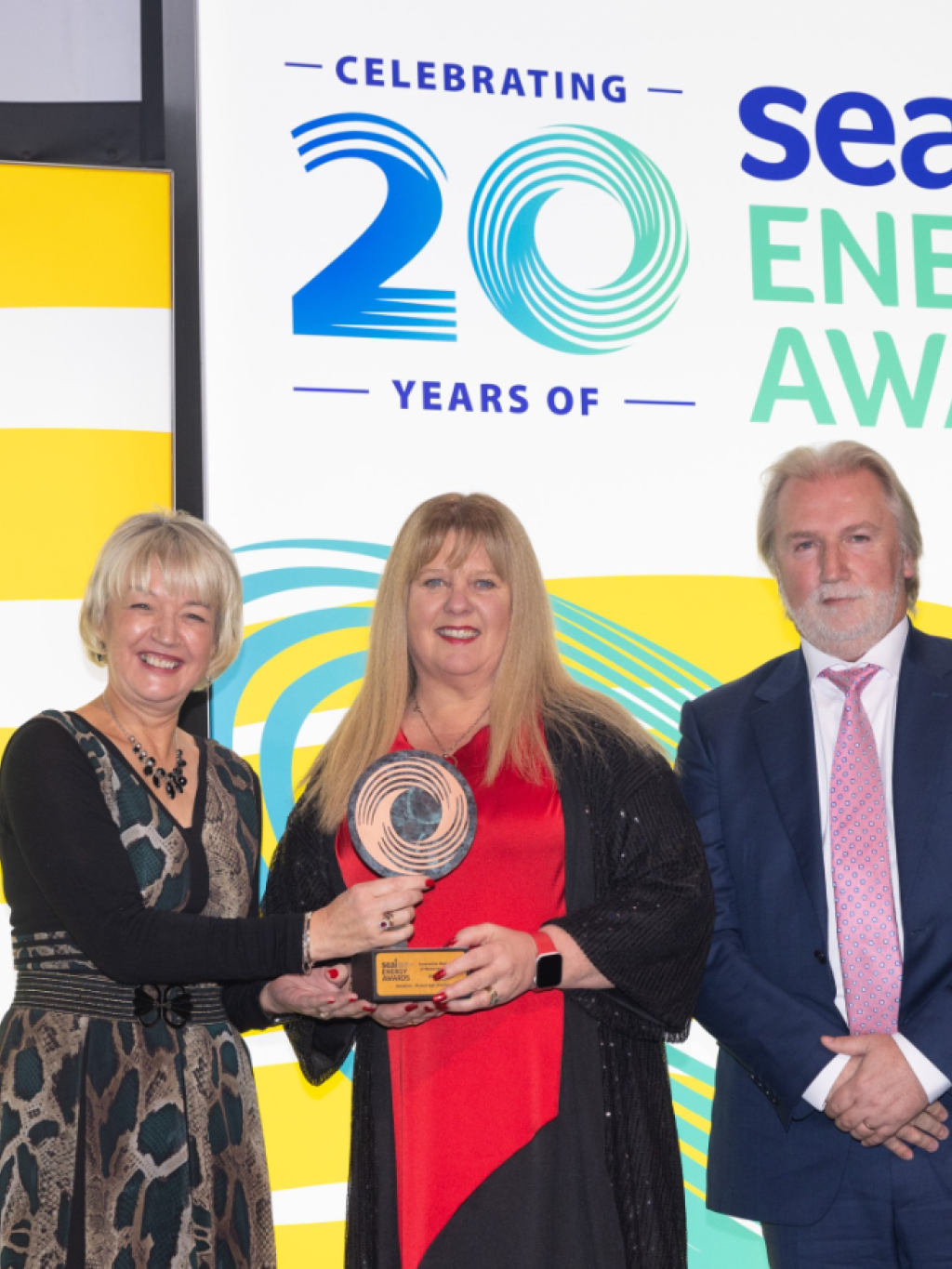
Design-led energy performance optimisation at Kilsaran Asphalt Plant, Tullamore
By following SEAI's EXEED programme, energy efficient design was embedded into plant design, monitoring and operational management at Kilsaran Asphalt production facility, Tullamore.

Background
Kilsaran is one of Ireland's leading construction materials manufacturers, supplying a wide range of products including concrete, aggregates, asphalt, and paving solutions. Founded in 1964, the company operates an extensive national network of manufacturing and distribution facilities serving the residential, commercial and infrastructure sectors.
Energy represents a significant operational cost within Kilsaran’s manufacturing operations. As part of the wider commitment to sustainability, operational excellence and carbon reduction, Kilsaran has adopted structured energy management practices aligned with international standards and national climate targets. Participating in the EXEED certified programme was a key component in their strategic approach.
The company recognised the opportunity to embed energy performance at the design and operational stages of its Tullamore facility. The goal was to ensure long term energy efficiency, resilience, and reduced environmental impact.
The project
The project focused on the design, optimisation and verification of energy performance at Kilsaran’s Tullamore manufacturing facility. The objective was to ensure that energy efficient design was embedded into the project from the earliest stages and that the facility would operate at optimal performance throughout its Lifecyle.
The EXEED project encompassed the full asphalt production system, including fuel combustion systems, asphalt dryer operation, electrical consumption, and process control infrastructure. This clearly defined boundary ensured accurate attribution of energy consumption and savings.
This project demonstrates the effectiveness of the EXEED framework in enabling design led energy optimisation, validated through rigorous measurement and verification.
The project followed the EXEED methodology in accordance with IS. 399, which emphasises:
- Evidence based design decisions
- Considerations of multiple design options and energy performance scenarios
- Verification of actual energy performance following implementation
Key elements of the project included:
- Establishment of robust energy baseline for the facility
- Detailed analysis of energy consuming systems, including process equipment and auxiliary services
- Integration of energy efficient technologies into the facility design and operation
- Adoption of measurement and verification practices aligned with international best practice
EXEED methodology
The EXEED methodology ensured that energy performance was treated as a core design parameter, rather than an afterthought, resulting in a facility designed for efficient, long-term operation.
The energy efficient design led measures implemented included:
- Fuel system transition from heavy fuel oil to LPG conversion. This included the installation of a dual fuel burner, which enhances the carbon savings due to a lower LPG carbon factor
- Thermal system optimisation with new insulated asphalt dryer drum and warm mix asphalt system
- Process optimisation with ADX process control system and variable temperature control
- Energy monitoring infrastructure with sub-metering installation, energy management software integration, and integration into the ISO 50001 Energy management system
Advanced process control systems and sub metering infrastructure enabled real time monitoring of energy consumption and operational efficiency. These systems support ingoing optimisation by operational personnel and enable management review of energy performance indicators in accordance with ISO 50001 continuous improvement requirements.
The integration of energy performance monitoring into the ISO 50001 energy management system ensures savings through continuous monitoring, operational control, and periodic management review, significantly reducing the risk of performance degradation over time.
Results and key achievements
Through participation in the EXEED certified programme, Kilsaran achieved EXEED Managed certified status for the project at the Tullamore facility. The Tullamore site is the first Kilsaran site to be certified. The sustained annual reductions in energy consumption and carbon emissions, were verified through the certification of the EXEED IS. 399 methodology and the integration with the ISO. 50001 energy management. This was achieved by a combination of process optimisation, fuel switching and digital energy management.
Performance highlights:
| Indicator | 2022 Baseline (12 months – Jan –Dec) | Post-Project (12 months- Jan – Dec) | Outcome / Improvement |
| Energy intensity use per tonne (kWh/t) | 95.75kWh/t | 83.32kWh/t | 12.98% reduction in kWh/t |
| Annual Energy Savings | 6,113,328 kWh/year | 5,178,407 kWh/year | 934,920.67 kWh/year |
| Annual CO₂e emissions | 1,687.81tCO₂e | 1,444.43tCO₂e | ~243.38 tCO₂e /year |
| Payback period | — | — | 11.67 years based on energy savings |
| EXEED Certification | Stage 2 Capital Investment | EXEED Managed Certified | Certification Plaque Presentation in May 2026 |
Measurement and verification
Energy savings were calculated using the avoided energy method. This is when businesses look at what they need energy for and if they can do it without using energy. Baseline regression equations derived from 2022 historical production and energy data were applied to the 2024/2025 reporting period production levels to determine the adjusted baseline consumption. This ensured the savings attribution was independent of production variability.
Monitoring and verification were conducted in accordance with IPMVP Option B (Retrofit Isolation- All parameter measurement), using measured fuel, electricity and production data within a defined boundary covering asphalt production and manufacturing operations.
Fuel R2 = 0.93, and electricity – R2 =0.96, demonstrating strong statistical correlations between production and energy consumption. This enabled robust baseline adjustment and confirmed a 15.3% annual energy reduction, equivalent to 243.38tCO2e avoided annually.
Energy management integration
Energy performance indicators (EnPIs), linking production output and energy consumption, were established and embedded with the organisations ISO 50001 Energy Management System.
This ensures:
- Continuous monitoring or plant performance
- Sustained optimisation beyond retrofit phase
- Ongoing EnPI tracking and management review
Reduced risk of performance drift
By applying the EXEED IS. 399 design led methodology at the earliest stages of project development, Kilsaran ensured the facility was optimised not only for production efficiency but also for long term energy and carbon performance.
Certification and compliance validation
The project achieved EXEED Managed Certification, demonstrating organisational level energy performance transformation in addition to technical optimisation.
As part of certification, the project received an independent third-party audit by NSAI. The audit verified compliance with EXEED IS. 399 methodology and ISO 50001 requirements, and confirmed that monitoring systems, operational controls, and governance processes were fully implemented.
“The EXEED process enabled us to move beyond one-off upgrades and embed energy performance into how we operate the plant. Through design- led optimisation, robust monitoring, and independent verification, we have achieved measurable energy and carbon savings while improving operational control and long-term efficiency.”
Organisational impact
This project demonstrates how industrial facilities can transition from isolated efficiency upgrades to structured, data driven energy performance management.
By integrating technical optimisation, digital monitoring, and ISO 50001 governance, Kilsaran has established a model for sustained industrial decarbonisation.
Next steps
Building on the success of the EXEED project at the Tullamore site, Kilsaran can further strengthen its energy management and sustainability performance. Potential next steps could include:
- Replication across additional sites by rolling out the EXEED IS. 399 principles to other asphalt and materials production facilities within the group.
- Electrification and low-carbon heat transition by exploring hybrid or electrified process heating systems as the grid carbon intensity declines.
- Renewable energy integration with on-site solar PV or renewable energy procurement to reduce Scope 2 emissions further.
- Advanced process analytics by leveraging optimisation or enhanced process analytics to improve dryer efficiency and fuel utilisation.
- Circular materials integration by increasing use of recycled asphalt pavement (RAP) to reduce both embodied carbon and process energy intensity.
- Science-based carbon target alignment by aligning plant-level performance with corporate net-zero or science-based target commitments.
By embedding the EXEED principles into its project delivery and operational processes, Kilsaran can further reduce energy consumption, operating costs, and carbon emissions, while strengthening its leadership in sustainable manufacturing.
EXEED
Start your organisation’s energy optimisation today. Design for energy efficiency and decarbonisation from the outset, and use the EXEED approach to reduce fuel, cut carbon and improve performance across your operations.
Learn how your organisation can achieve verified energy savings and operational excellence and decarbonisation with SEAI’s EXEED programme.
Learn more about exeed (opens in a new tab)