Optimising hotel energy efficiency at Mullingar Park Hotel
Mullingar Park Hotel’s successful EXEED certified energy transformation delivers energy savings of 665,905 kWh/yr and carbon reduction 138 tCO2/yr.

Background
Mullingar Park Hotel is a family-owned, four-star destination hotel in Ireland’s midlands. It offers premium accommodation, conference, banqueting and spa leisure facilities, including a 20m swimming pool, sauna, steam room and fully equipped gymnasium. Faced with rising energy costs, evolving sustainability requirements, and the need to future-proof operations, the hotel embarked on a structured energy journey.
Using the SEAI EXEED (Excellence in Energy Efficient Design) methodology in accordance with IS. 399, the hotel aimed to improve energy performance, reduce carbon emissions and deliver independently verified results.
The hotel's energy management journey first started during the COVID-19 period, when energy monitoring highlighted that consumption remained unexpectedly high despite reduced occupancy. This prompted the implementation of comprehensive sub-metering, enhanced monitoring and operational optimisation measures, providing full visibility of energy use across the site. These early initiatives became the foundation for the hotel's long-term energy strategy and its subsequent EXEED programme, enabling the identification and delivery of deeper energy savings.
The EXEED project
Prior to the EXEED project, Mullingar Park Hotel had already achieved significant energy savings through energy management initiatives, utility optimisation and heating system upgrades delivered in partnership with Watt Footprint, an energy management company.
"With many of the readily identifiable opportunities already addressed, the EXEED IS 399 processes provided a structured framework to uncover more complex energy-saving measures and delivered additional savings of approximately 10.5%. These savings should be viewed as part of the hotel's wider energy efficiency journey, which has resulted in overall energy savings 33.9% to date. Building on this success, the hotel is now exploring further opportunities to reduce energy consumption and align its significantly reduced energy demand with on-site renewable energy generation, supporting continued improvements in energy performance and sustainability." - Timmy McCarthy, Specialist Energy Manager, Watt Footprint
The project adopted a whole-system approach to identify and optimise energy performance across the facility.
The EXEED methodology ensured that measures were evaluated as part of a coordinated energy strategy, enabling deeper savings and stronger long-term performance outcomes. The project followed the EXEED IS 399 methodologies, applying a design process focused on energy performance optimisation from the outset. The EXEED programme enabled better design decisions, not just funding support.
The key measures included:
- Ventilation and air-conditioning upgrades, including the function room’s air conditioning systems, with chiller energy unit savers, air handling unit (AHU) upgrades with VSDs, and swimming pool AHU ductwork insulation
- Conference room lighting and function room CO2 demand-led control upgrades
- Advanced building management system (BMS) controls and energy management systems, enabling real-time visualisation, monitoring and operational performance optimisation, with remote monitoring, fault detection, data trending and performance analysis features
- Future scalability of the BMS, allowing new assets to be integrated, and adaptability for future business growth and technological updates
- Detailed energy modelling and measurement and verification (M&V)
- Integrated design assessment to maximise interactions between systems and operational requirements
Results
The project delivered strong measurable reductions in energy use, carbon emissions and operating costs:
- Annual energy savings = 665,905 kWh/yr
- Annual carbon reduction = 138 tCO2/yr
- Annual costs savings = €88,776 (a 10.8% cost reduction)
- Improved energy performance indicator (EnPI) = reduced from the baseline of 155.85 kWh/ guest to 140kWh/guest
The project benefits included:
- Reduction in overall energy demand and carbon emissions
- Lower operating costs and improved resilience to energy price volatility
- Enhanced guest comfort and indoor environmental quality
- Improved system reliability, control, and operational performance
- Independently verified energy performance through the National Standards Authority of Ireland (NSAI)
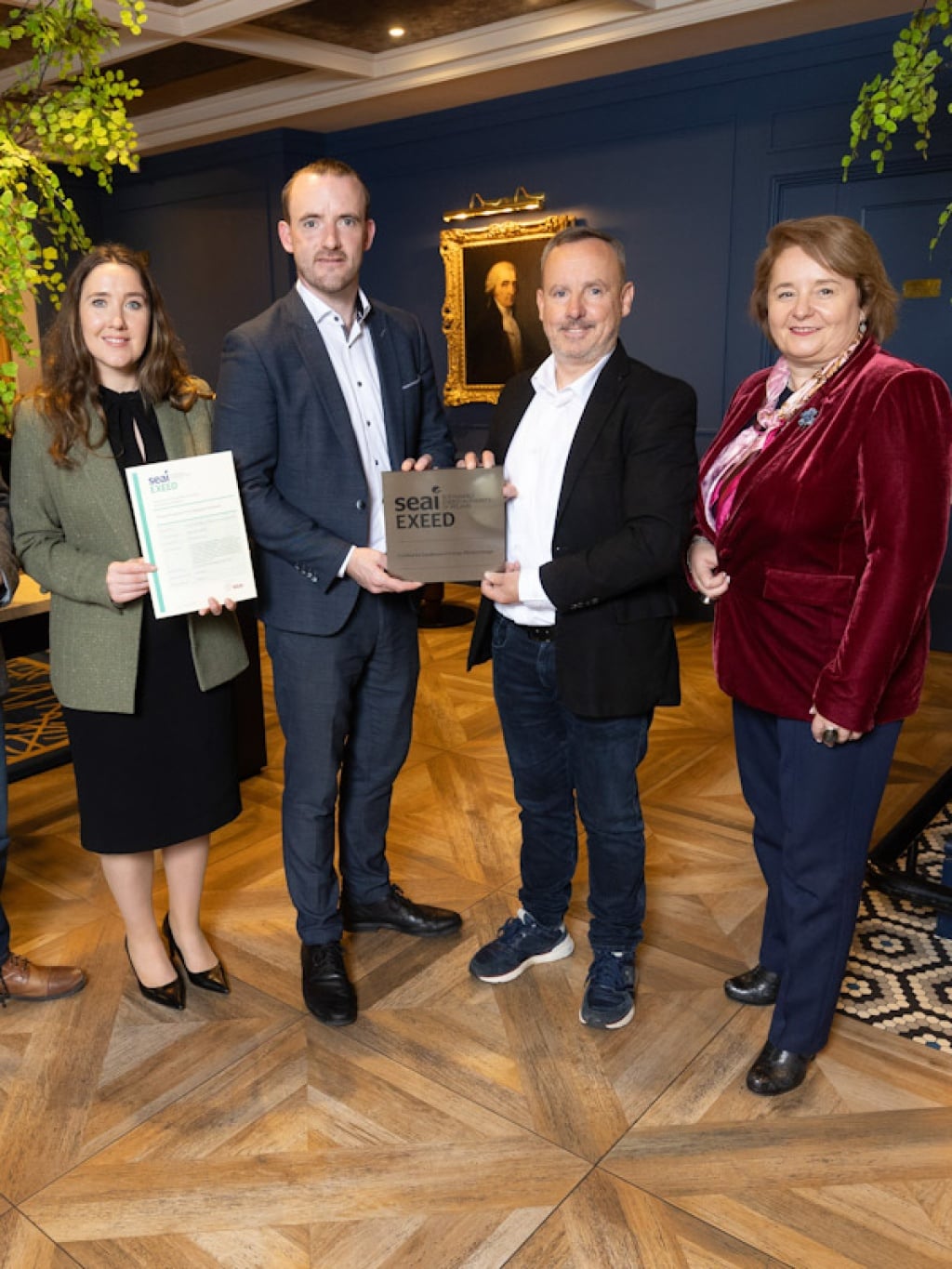
- Achievement of SEAI EXEED Designed certification
"Watt Footprint were proud to support Mullingar Park Hotel on their second EXEED project with us. A tremendous achievement by the Mullingar Park team, the impact and significant savings are clear to see. We look forward to the continued partnership." – Paul Mahon, CEO Watt Footprint

Business Benefits
The project has strengthened Mullingar Park Hotel’s position as a sustainable hospitality provider while supporting long-term operational efficiency.
- Enhanced sustainability credentials and brand reputation
- Improved alignment with ESG (Environmental, Social and Governance) objectives
- Increased resilience against future energy price fluctuations
- Improved long-term asset performance and value
- Improved visibility of energy performance, enabling better operational decision-making and supporting a long-term roadmap for decarbonisation.
EXEED certification
Achieving EXEED Designed certification provides independent validation of the project's performance and design quality in accordance with IS 399. The certification process ensures that energy savings are real, measurable, and sustained over time.
Key learnings
- Early-stage energy analysis unlocks deeper energy savings opportunities
- Whole system thinking delivers greater benefits than individual upgrades
- Continuous monitoring and verification are critical to maintaining performance
- Stakeholder collaboration is essential when implementing projects in live hospitality environments.
“By taking a structured design led approach to energy efficiency, we’ve delivered measurable savings and improved performance across the entire facility. It’s a win for the business, our guests, and the environment."
Next steps
Mullingar Park Hotel is continuing its sustainability journey and is exploring opportunities to:
- Integrate renewable energy technologies, such as solar PV, and battery storage,
- Further electrify building services,
- Expand smart energy management capabilities,
- Deliver additional carbon reductions in line with Ireland’s climate targets,
- Continue to optimise existing building systems through data-driven energy management and continuous operational improvement.
By continuing to apply EXEED principles, future investments can deliver optimal energy, carbon and business performance.
EXEED
Start your organisation’s energy optimisation today. Design for energy efficiency and decarbonisation from the outset, and use the EXEED approach to reduce fuel, cut carbon and improve performance across your operations.
Learn how your organisation can achieve verified energy savings and operational excellence and decarbonisation with SEAI’s EXEED programme.
Learn more about exeed (opens in a new tab)