Tyndall National Institute lowers energy use and carbon emissions by 33% and energy costs by 23%
The energy team used the EXEED IS 399 process to identify significant energy and CO2e savings measures across its campus.

Background
Tyndall National Institute was established as a stand-alone institute. It was created through a partnership between the Department of Further and Higher Education, Research and Innovation (DFHERIS) and University College Cork (UCC).
The Institute is widely recognised as the cornerstone of Ireland’s semiconductor ecosystem. It is the only organisation that spans:
- fundamental and applied research
- advanced fabrication and prototyping
- industry engagement
- and semiconductor talent development at scale
It is a trusted partner to multinational and indigenous industry. The Institute is a leading European research and technology organisation, and a central pillar of Ireland’s national semiconductor capability. Tyndall is home to a multidisciplinary research community of over 600 people from more than 50 nationalities.
Diverse buildings
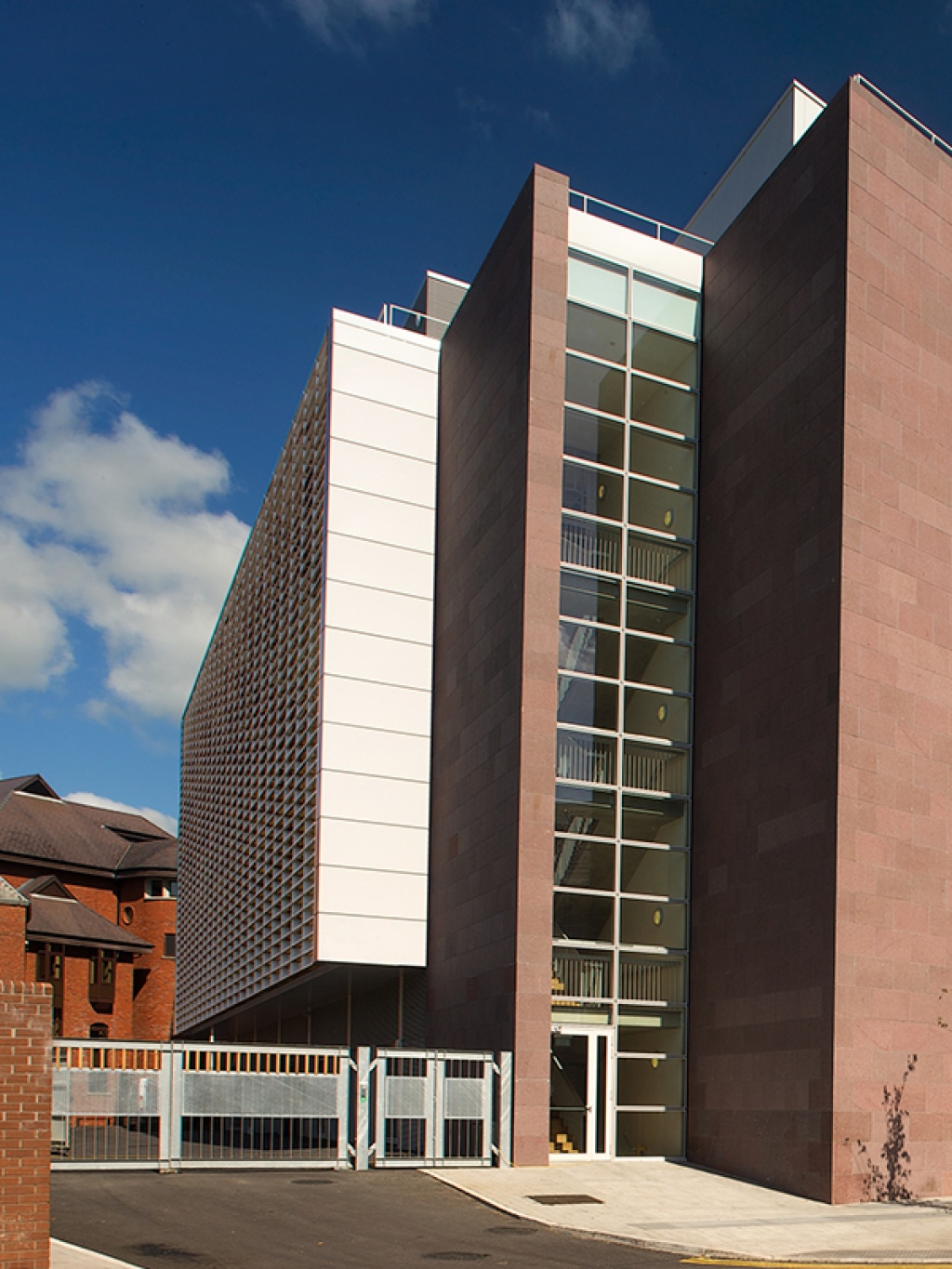
The Tyndall campus comprises a diverse mix of buildings. They range from 19th-century structures to modern facilities completed in 2008. They are continuously upgraded to meet evolving technical and environmental standards. One recent project transformed a 120-year-old kiln building into office space. The refurbishment achieved a BER A3 rating. It won the SEAI Energy in Buildings Award in 2021.
The campus includes over 70 specialist laboratories and cleanrooms. These spaces house energy‑intensive equipment. Cleanrooms require precise control of temperature and humidity. They also require strict air quality and particulate levels control. They operate at ISO 4 to ISO 6 classifications. As a result, Tyndall operates with a consistently high energy baseline due to the nature of the semiconductor production processes. Energy intensity is significantly higher than typical office or educational buildings.
Commitment to Energy Management
Tyndall has a long‑standing commitment to best‑practice energy management. The Institute has been certified to ISO 50001 since 2011. Between 2019 and 2023, targeted infrastructure upgrades delivered 2.9 GWh of energy savings and reduced emissions by 1060tCO₂. This is despite increased demand from new laboratories and cleanroom expansion.
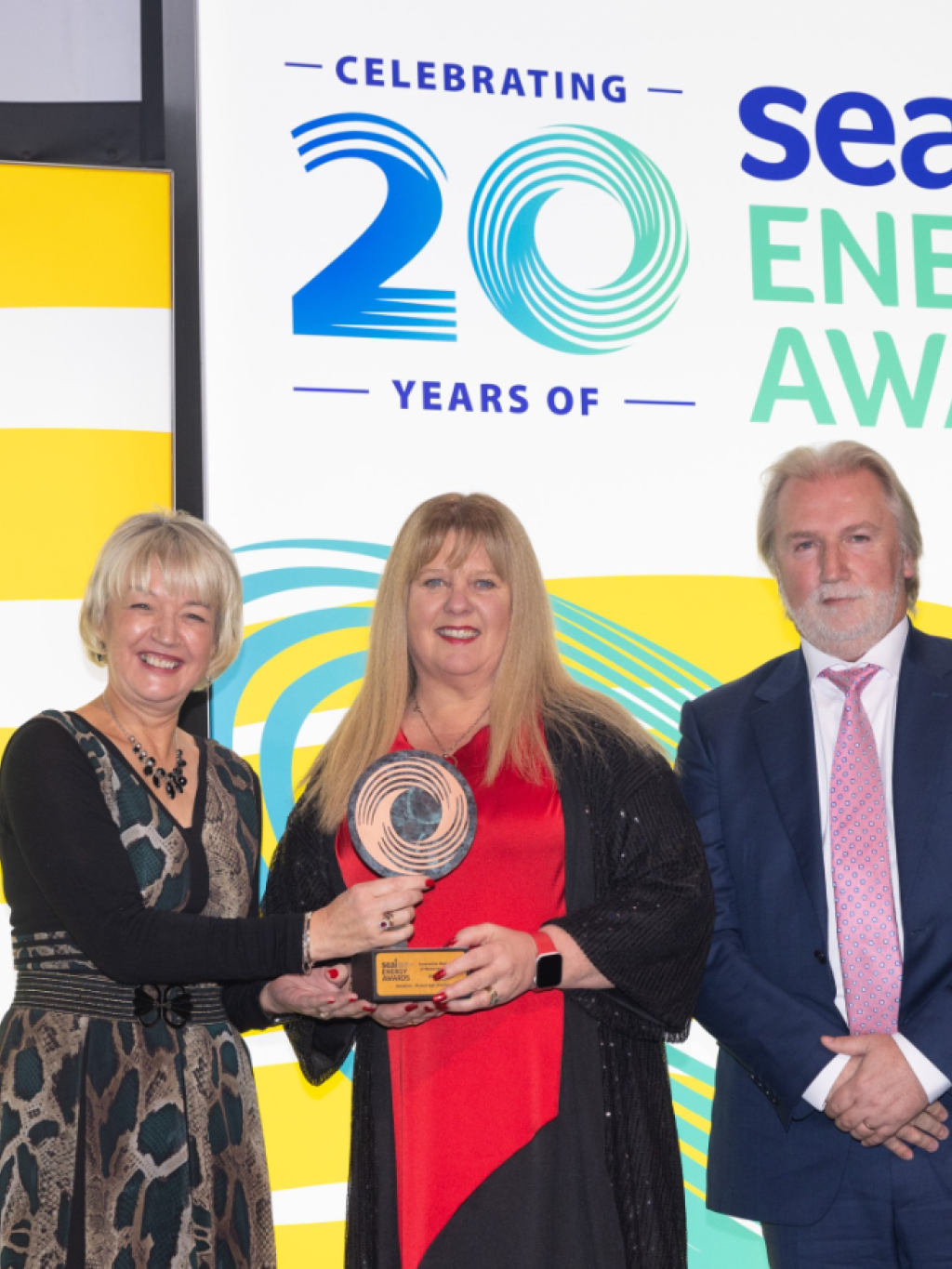
Tyndall National Institute and UCC have won eight SEAI Energy Awards between them over the past 20 years. Tyndall’s awards include:
- 2010 Renewable Energy Systems
- 2012 Outstanding leadership in energy management
- 2021 Energy in Buildings (watch case study video)
The project
In 2023, Tyndall launched a comprehensive decarbonisation programme. The programme aimed to eliminate fossil fuels from onsite heating. Tyndall implemented SEAI’s Excellence in Energy Efficiency Design (EXEED) process. This process enabled a deeper understanding of building energy use. It identified potential improvements and savings.
The strategy focused first on understanding energy demand. The goal was to eliminate or reduce demand where possible. Tyndall only introduced low‑carbon technologies after they reduced demand. This approach reflects best practice in energy efficient design. It is a core principle of EXEED and IS 399.
"We saw the EXEED programme as an opportunity to develop a decarbonisation strategy for the Institute. With buildings dating back to the 1800s, and a highly complex mix of uses, a robust and structured approach to carrying out a deep dive energy audit was essential. We prioritised demand reduction before introducing low-carbon technologies, and the EXEED model provided the ideal framework to deliver this”.
The challenge
Research facilities require significant heating, cooling, and ventilation capacity. These systems are complex, if not optimised and monitored, they can result in high energy consumption.
Over many years, the Institute has actively improved energy performance. This was supported by a mature ISO 50001 energy management system. The system drove continual improvement across operations.
Building on this foundation, Tyndall applied the EXEED Stage 1 process. It identified deeper, system‑level efficiency opportunities which supported the development of a clear, evidence‑based roadmap. The roadmap focused on reducing energy demand. It also targeted the elimination of fossil fuels within thermal infrastructure.
The project aimed to support Tyndall’s decarbonisation goals. It followed an efficiency‑first approach.
This included:
- challenging space conditions
- reviewing building fabric performance and condition
- reviewing management processes
- reviewing the utility services and production equipment across the Institute
“The Stage 1 audit rigorously challenged the operational setpoints of every utility, process, and research asset, leaving no stone unturned.”
The EXEED process – Stage 1
During EXEED Stage 1, the team undertook a detailed review. The process followed the ‘Challenge and Analyse’ methodology. All campus energy systems were assessed. This included heating, cooling, air handling, and control systems. The team identified opportunities to improve energy performance and reduce carbon emissions.
The Stage 1 design and feasibility process identified 123 improvement opportunities. These applied to significant energy users. Most focused on reducing energy demand across the campus. They relied primarily on operational control and optimisation.
Key optimisation measures identified included:
- Upgrades and optimisation of the building management system (BMS,)
- Improved control and balancing of air handling units,
- Optimisation of pumping systems and hydraulic performance,
- Enhanced heat recovery within ventilation systems,
- System rebalancing and operational optimisation,
The process focused on reducing energy demand first before introducing low-carbon technologies. After demand reduction measures were defined, heat pump integration followed. Heat pumps provided low‑carbon heating and cooling. This supported the transition away from fossil fuel-based systems.

The EXEED process – Stage 2
Potential projects identified in Stage 1 were grouped into an implementation plan. This plan formed Stage 2 of the EXEED IS 399 funding support application. Stage 2 focused on capital investment.
The projects were carried out in the following order:
- Operational control improvements,
- Low/Medium cost demand reduction projects,
- Capital cost decarbonisation projects,
- Heat pump installation was the final step.
The measures implemented during Stage 2 included:
- Initiating setback on air handling units (AHUs) where feasible,
- Optimisation of heating, ventilation, and air conditioning (HVAC) systems and building management systems (BMS) across the facility,
- Heat recovery system optimisation,
- Replacement of 3 gas boilers (1MW each, generating hot water @ 70⁰C) and 3 air cooled chillers (735kW each, generating chilled water @ 5-10 ⁰C) with 3 new low temperature high efficiency heat pumps,
- Chilled water and low-pressure warm water distribution control optimisation using pressure independent control valves (PICVs),
The SEAI EXEED approach also reduced the size of the mechanical plant. The smaller footprint allowed all plant to be located on the roof. This reduced overall project capital costs associated.
With sustainability central to operations, energy efficient design now directs performance across the entire campus. All future projects have IS 399 methodologies built in from the initial concept design.
Results
The EXEED process identified a range of opportunities that together achieved annual energy savings of approximately 2.9 GWh/yr. and 1,060 tCO2e/yr, saving 33% against the baseline annually.
Operational energy demand was significantly reduced. Long‑term decarbonisation objectives were supported. Public sector climate commitments were also met. Lower demand enabled a reduced electrical maximum import capacity (MIC). This reduced future ongoing service costs.
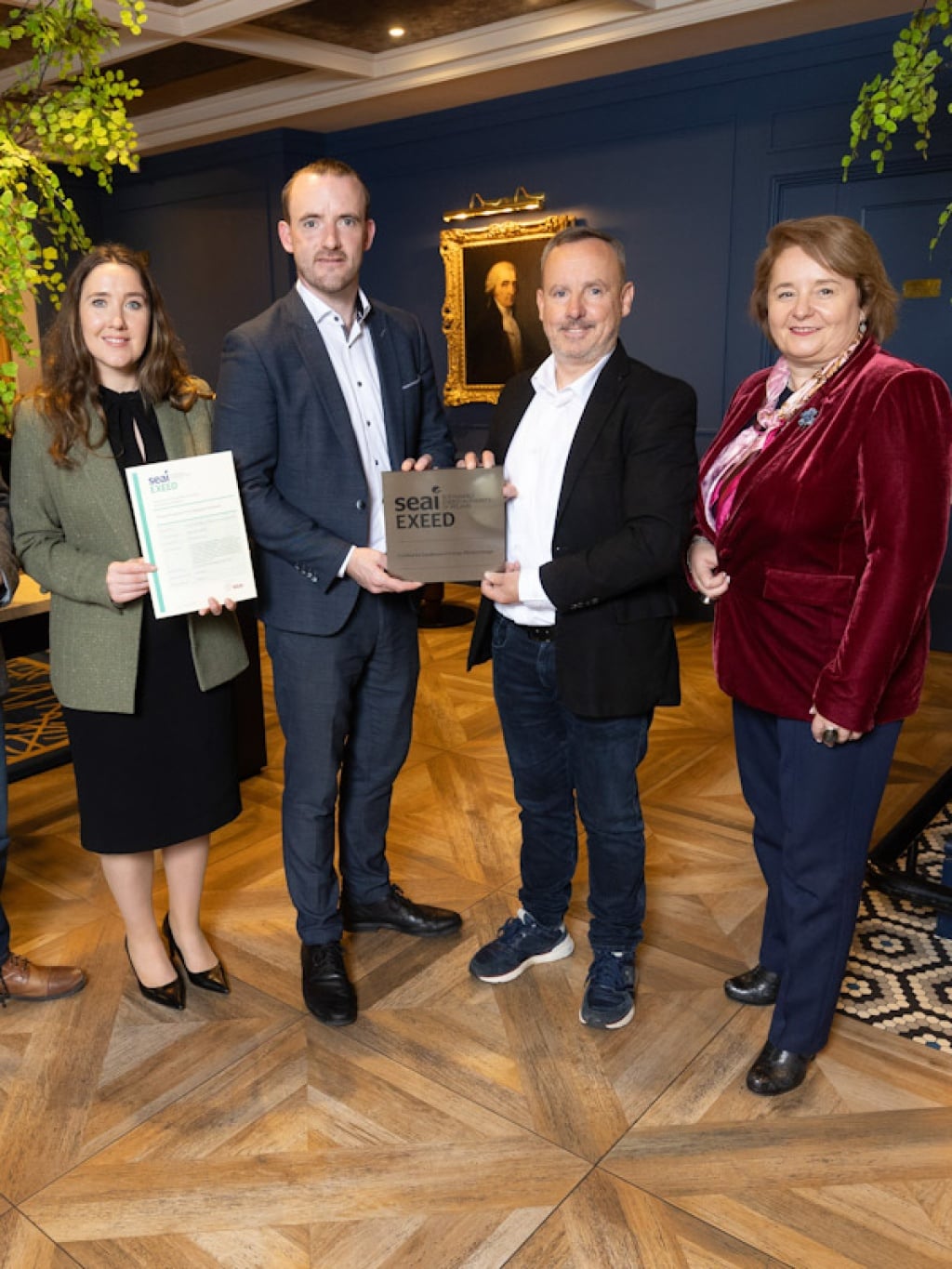
The project achieved EXEED Verified Certification. This confirms successful application of the Energy Efficient Design methodology. Performance was validated in line with ISO 50015.
Performance highlights:
| Indicator | Baseline | Post-Project | Outcome / Improvement |
| Annual energy use | 12.5GWh | 9.6GWh | 2.9GWh/yr annual savings / 23.2% annual energy savings |
| Annual CO₂e emissions | 3,206 tCO₂e/yr | 2,146 tCO₂e/yr | 1,060 tCO₂e /yr Annual carbon emission savings including supply side reductions / 33% annual savings |
| Payback period (ROI) | 11.6 years | 8.1 years | |
| EXEED Certification | -- | EXEED verified to ISO 50015 | EXEED plaque presented in May 2026 |
Key achievements
Tyndall achieved full engagement across the wider team, including facilities and operations personnel.
The Leadership team committed to progressing to EXEED Stage 2. This was driven by energy, carbon, and cost savings.
They developed a strong understanding of funding mechanisms to support decarbonisation. Although ISO 50001 was already in place, EXEED IS 399 added deeper insight. It enabled them to identify a wider range of efficiency opportunities.
“ISO 50001 provides a strong foundation for energy audits, but EXEED took us further, unlocking additional opportunities and driving deeper analysis. The Challenge & Analyse process pushed us to focus on areas we wouldn’t normally prioritise.”
Following Stage 1’s completion, the Institute progressed to Stage 2 with EXEED. Capital projects were implemented with SEAI EXEED funding support. Additional funding was secured through the Energy Efficiency Obligation Scheme (EEOS).
These measures provide a strong foundation for continued decarbonisation. They also support national climate and public sector energy targets.
“The race to decarbonise is often driven by complex and costly technologies. Through the EXEED process, we focused on reducing this cost and complexity by challenging our existing systems, processes, and equipment. This approach has been a success, placing us on a credible pathway to decarbonisation well ahead of our public sector obligations. I would highly recommend EXEED to any organisation seeking a deeper understanding of its energy use.”
EXEED Certification
The project achieved EXEED Verified certification, aligned with ISO 50015, with performance independently validated by the National Standards Authority of Ireland (NSAI).
This confirms measurable energy performance improvements. Improvements were delivered through Energy Efficient Design. They demonstrate a strong commitment to verifiable, high‑impact decarbonisation.

Next steps
Tyndall National Institute plans to:
- Continue to optimise system performance through fine tuning and optimisation. The post project optimisation phase can deliver 10-20% additional savings compared with initial operation.
- Share lessons learned both internally and externally on energy efficient design and the project successes.
- Identify opportunities to replicate the EXEED IS 399 methodologies across other facilities and future capital projects.
Learn about EXEED
Start your organisation’s energy optimisation today. Design for energy efficiency and decarbonisation from the outset, and use the EXEED approach to reduce fuel, cut carbon and improve performance across your operations.
Learn how your organisation can achieve verified energy savings and operational excellence and decarbonisation with SEAI’s EXEED programme.
Learn more about learn about exeed (opens in a new tab)